 SOUTHERN CALIFORNIA
SOLAR CONTRACTORS' ALERT
July 2013
Brought to you by Power Planet
Your exclusive Energy Sentry distributor
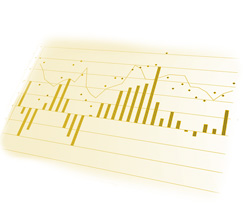
Electrical Usage Data from Your Utility's Website
Many California electrical utilities are now offering customers free access to their electrical usage data. SCE, PG&E, SDG&E, and Glendale customers now have, or will soon have, access to their Green Button Data directly from their utilities website. A customer can log on to their account, select the meter, date range, and file format, and download info about their utility usage.
The 15-minute interval data provides a wealth of information for the energy practitioner to evaluate. The data can be used to generate load duration charts, which are used for devising demand curtailment strategies, calculate TOU usage for solar sizing, and to determine the client's best demand control strategy. Green Button Data is much easier to retrieve and manipulate than usage data from a third party authorization. Data is now available for all customers with communicating smart meters. This means interval data is now available for small and medium commercial customers.
Download your customer's data and look at their load profile. Is that commercial customer really just hitting the peak demand 5 times per month? The installation of an electric demand controller could reduce their demand by 10% to 20%.
SCE Raises Commercial Demand Rates

The latest round of price increases from Southern California Edison has rocked the commercial solar market. The cost of the facilities demand under the Option R rate schedule has increased by 45% to 74%. The primary benefit of solar power for a commercial electrical customer had been the ability to qualify for the Option R rate schedule, with the significantly lower demand rates. The higher demand cost will now dilute the value of the Option R by reducing the ROI on solar installations.
Rob Lisman of Power Planet in Fullerton, CA says "The higher rates will diminish the value of commercial solar projects without proper demand mitigation strategies. Here in the heart of SCE territory, we are seeing an increase in solar contractors looking for demand control measures. The strategy is for the solar to do the heavy lifting on the demand reduction, and our demand control equipment picks up the slack when the sun doesn't shine."
The new SCE rate schedule has also increased the demand charges for non-solar customers by 4% to 29%, with the greatest increase falling on the TOU-3 and TOU-8 customers. Though not good for the electric ratepayer, this will help drive sales for commercial solar and demand control systems, like the Energy Sentry from Brayden Automation. The Energy Sentry is uniquely designed to control electrical loads in facilities under 10MW at a competitive price. It can operate in concert with a solar installation to maximize the project's return, and can also work with Edison's demand response programs.
Another opportunity arising out of the new SCE rates is the phasing out of the GS-2 non-TOU rate. All GS-2 customers will be moved to time of use rates by 2015. Not all current GS-2 customers will fare well on a TOU rate; they may see their monthly bill rising significantly. As Mr. Lisman says "it takes a hit to the wallet before a customer will pick up the phone and call." Looks like this is going to be a great year to be an energy professional in the southern California market.

Energy Sentry products are made for the sole purpose of helping consumers save money by using energy more efficiently. Even solar energy consumption costs can be reduced using the Energy Sentry line of electric demand controllers.